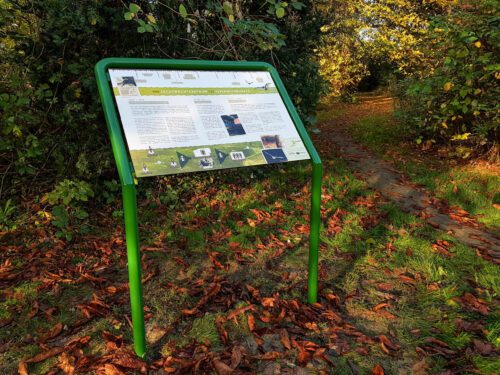
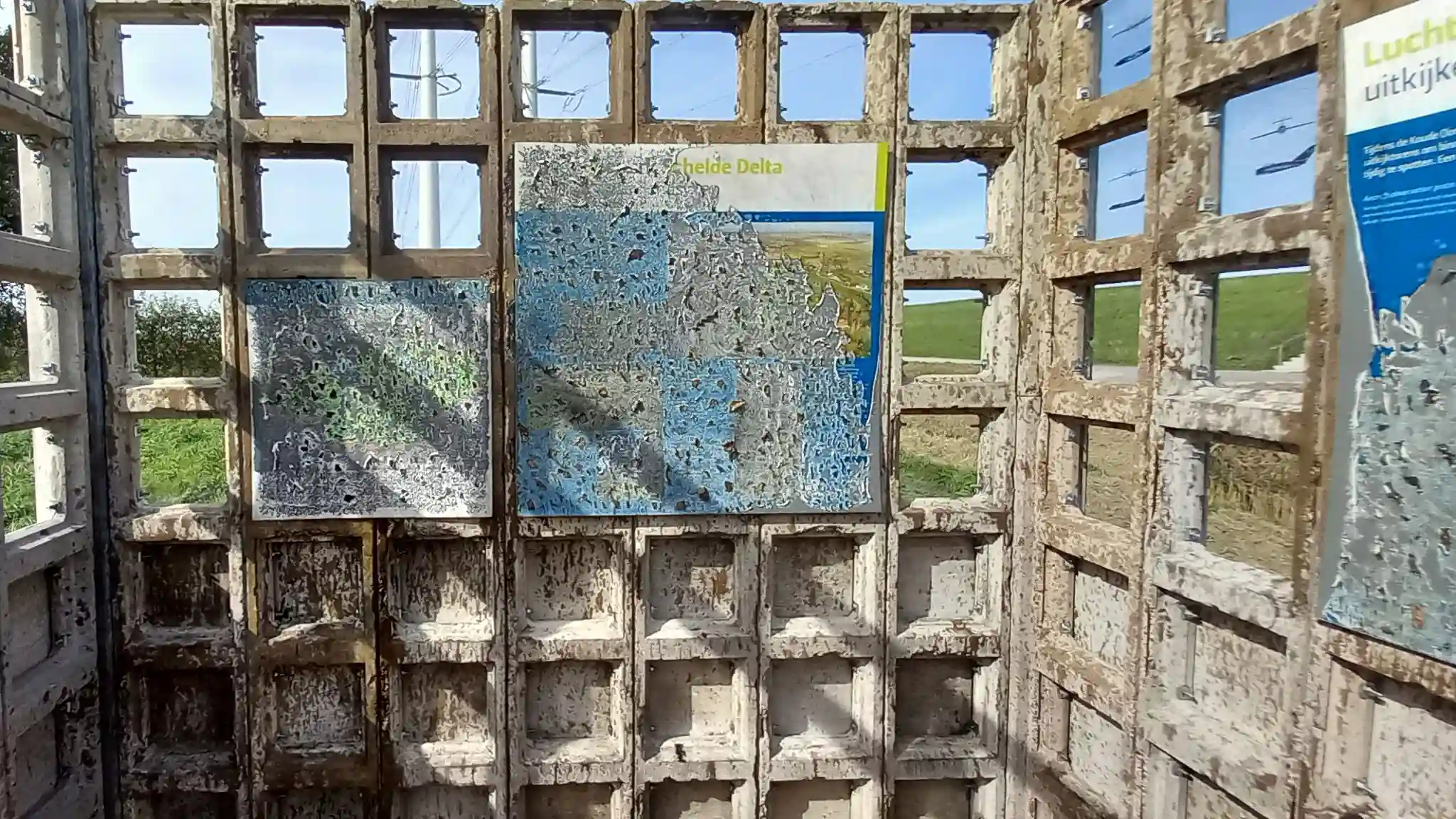
Ground Observer Corps
Aircraft observation posts from the Cold War in the Netherlands
1950-1968
Eyes and ears of aerial defence
A history of air defence against low-flying enemy aircraft in the Netherlands during the early years of the Cold War.
Between 1950 and 1968 thousands of volunteers and military staff of the Netherlands Ground Observer Corps (in Dutch: Korps Luchtwachtdienst) watched and listened for covertly approaching Soviet aircraft. The corps was a complement to the radarsystem of the time.
The Dutch observer corps was modeled after the UK Royal Observer Corps.
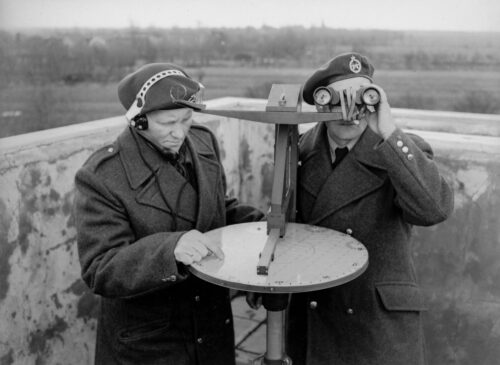
Volunteer observers on aircraft observation post Benschop, 1954. Source: National Archives of the Netherlands
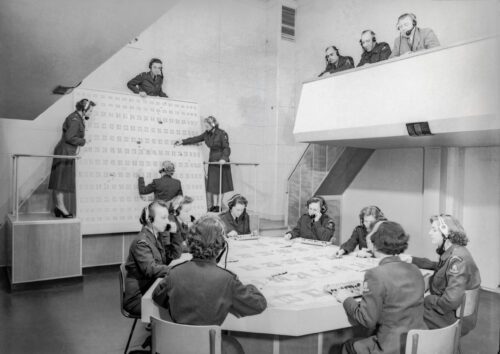
Operations Centre Rotterdam, 1954. Source: National Archives of the Netherlands
Air observation network
A nationwide network of aircraft observation posts was built as a detection and warning system against low-flying hostile aircraft during the Cold War.
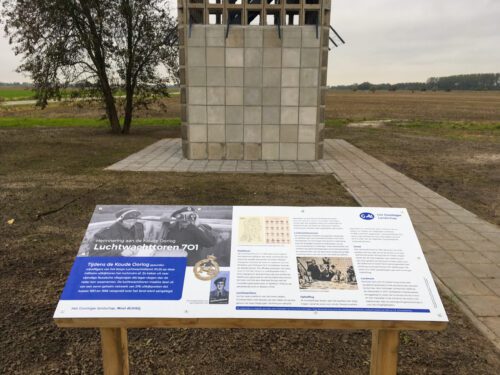
Preferably, these posts were placed on top of tall buildings. Where none were available, precast concrete towers were built, the aircraft observation towers or air watchtowers.
Male volunteers served on the observation posts and female volunteers in the regional operations centres.
Overtaken by developments
The network operated only briefly. Due to faster aircraft, improved radar coverage and changed defence strategies (integration within NATO air defence), the network was partially inactivated in 1964, and completely shut down in 1968.
After decommissioning, most of the nearly 300 observation posts and associated buildings have been demolished.
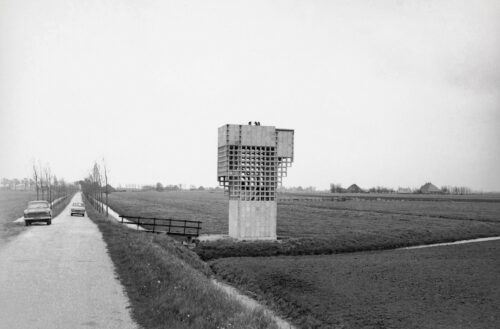
Aircraft observation post Spanbroek, 1954. Source: National Archives of the Netherlands
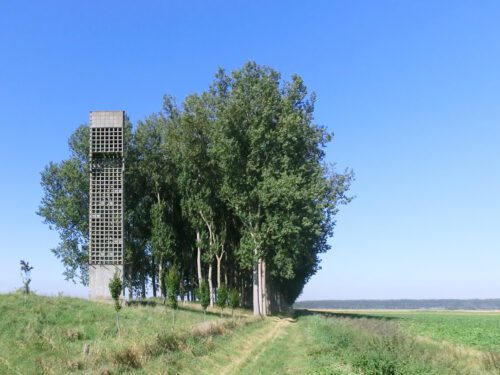
Aircraft observation post Nieuw Namen. Photo: Sandra van Lochem
Relics from the Cold War
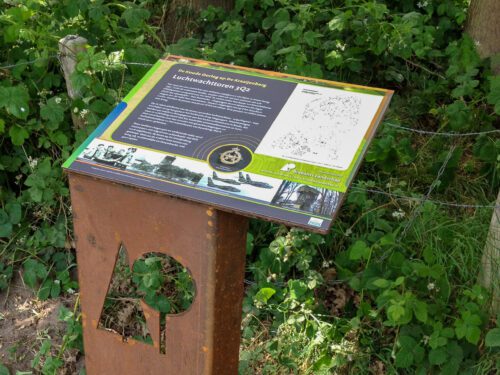
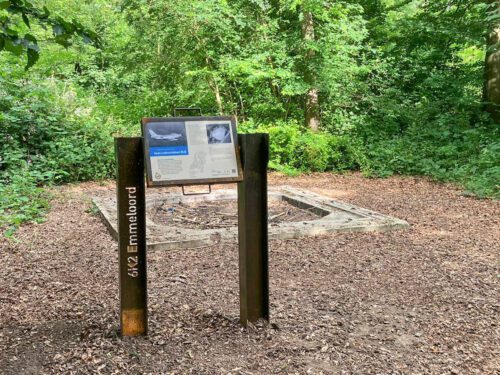
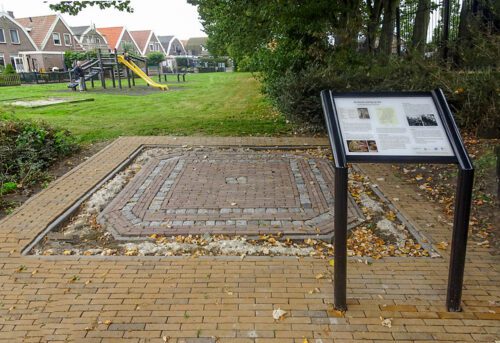
The remaining concrete towers, small observation posts on buildings, and a few operations centres are unique relics of our recent military heritage. View maps.
The history of this short-lived but remarkable part in the history of the air defence of the Netherlands during the Cold War remains alive by the remaining posts and the stories of the people who operated these posts and operations centres.
Similar observer corps existed in several other countries on both sides of the Iron Curtain.
Book Luchtwachttorens uit de Koude Oorlog
(Aircraft observation posts from the Cold War)
Beautifully designed by Beukers Scholma and published by nai010 publishers
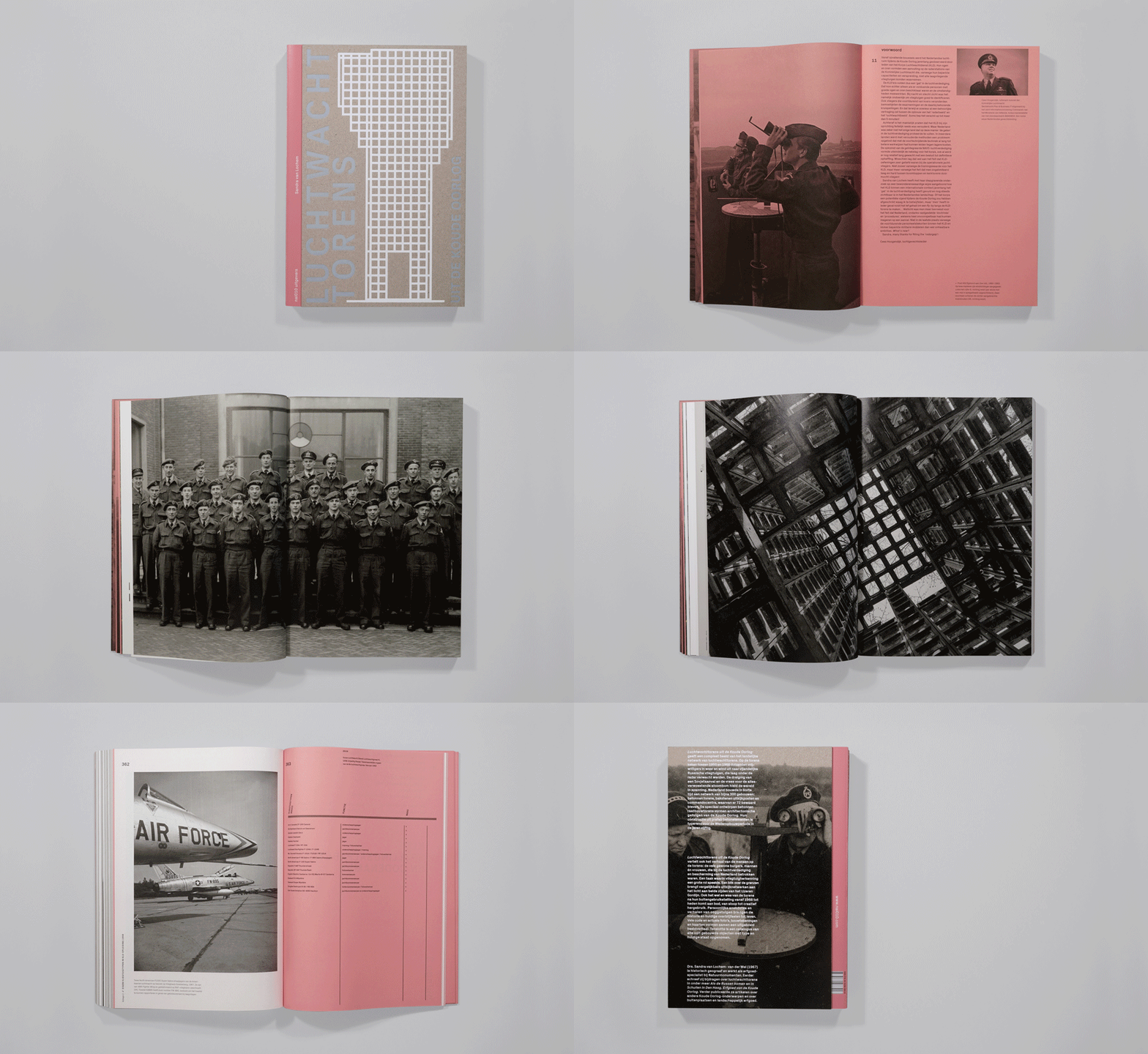
Luchtwachttorens uit de Koude Oorlog
Author: Sandra van Lochem
- € 49,95
- ISBN 978-94-6208-690-6
- hardcover, 22 x 32 cm
- 400 pages
- richly illustrated: 650 photograps, illustrations, maps.
- including catalog of all 276 observation posts and operations centres
- including brief overview of similar observer corps in other countries
- language: Dutch with English summary
- design Beukers Scholma
- 2022, nai010 publishers
Order
The book can be ordered from bookstores, online stores and from nai010 publishers